

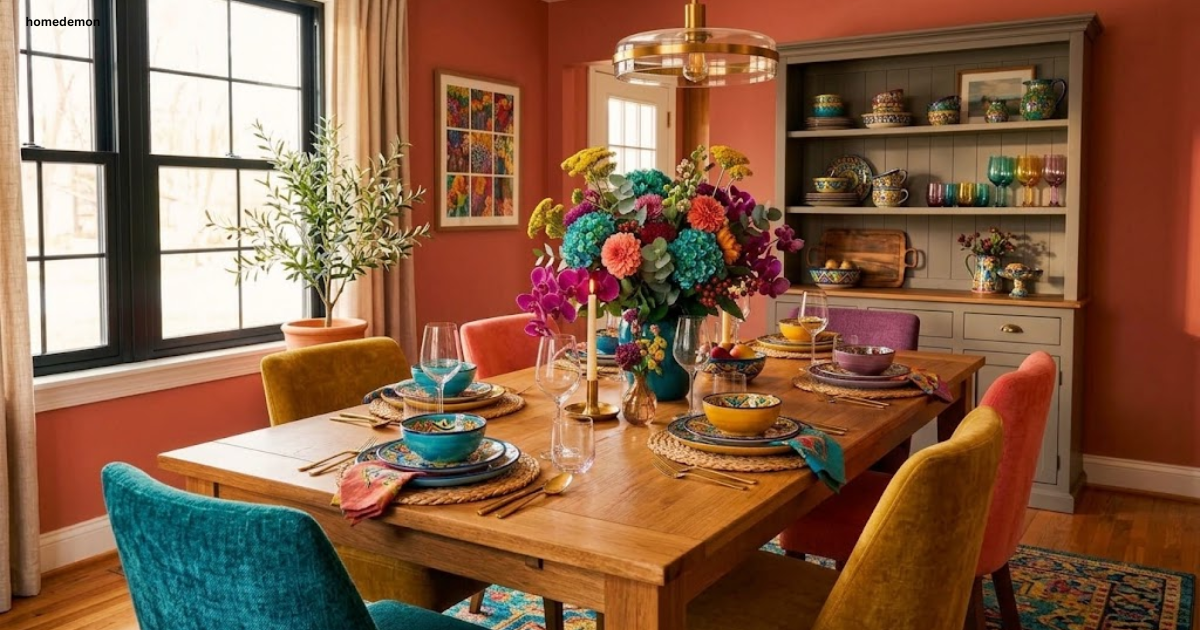
A dining table is often the largest single furniture investment in the living area of an open-concept home, yet it spends most of its life in an awkward limbo. Left completely bare, it looks utilitarian and unfinished—like a conference desk waiting for laptops. Overload it with elaborate candelabras and faux topiary, and you spend five minutes clearing clutter every time someone sits down with a plate of takeout.
Learning how to style a dining table is really about mastering negative space and daily function. The goal is to build an arrangement that anchors the room visually during off-hours, transitions effortlessly when meals are served, and feels intentional without looking like an untouchable showroom stage.
Here is a practical, designer-tested blueprint to styling any dining table—whether it sits in an open family kitchen or an elegant, curated traditional modern dining room.
1. Scale and Proportion: The Non-Negotiable Rules
Before placing a single bowl or candle, take a hard look at the dimensions of your tabletop. The number one reason dining setups fall flat is incorrect scale. Small objects look stranded on large tables; oversized arrangements choke conversation lines.
- The 14-Inch Rule: Any centerpiece designed to remain during dinner should generally stay under 14 inches tall, or sit high above eye level on an open, architectural pedestal. Nobody wants to crane their neck around a dense hydrangeas arrangement just to talk across the table.
- The Two-Thirds Guide: On an average rectangular table (72 to 96 inches long), your styling vignette should visually occupy about one-half to two-thirds of the center length. If it’s smaller, it looks like an abandoned coaster; if it runs from edge to edge, it crowds the place settings.
- Respect the Clearance Zone: Keep at least 18 inches of completely clear space from the edge of the table to the edge of the centerpiece. This gives plenty of room for dinner plates, stemware, and elbows.
2. Choosing an Everyday Table Centerpiece That Works
The secret to a low-maintenance home is an everyday table centerpiece you don’t have to dismantle three times a day. You want an arrangement built from heavy, tactile materials that hold up to daily life while looking grounded.
Here are four reliable formulas:
The Sculptural Dough Bowl or Vessel
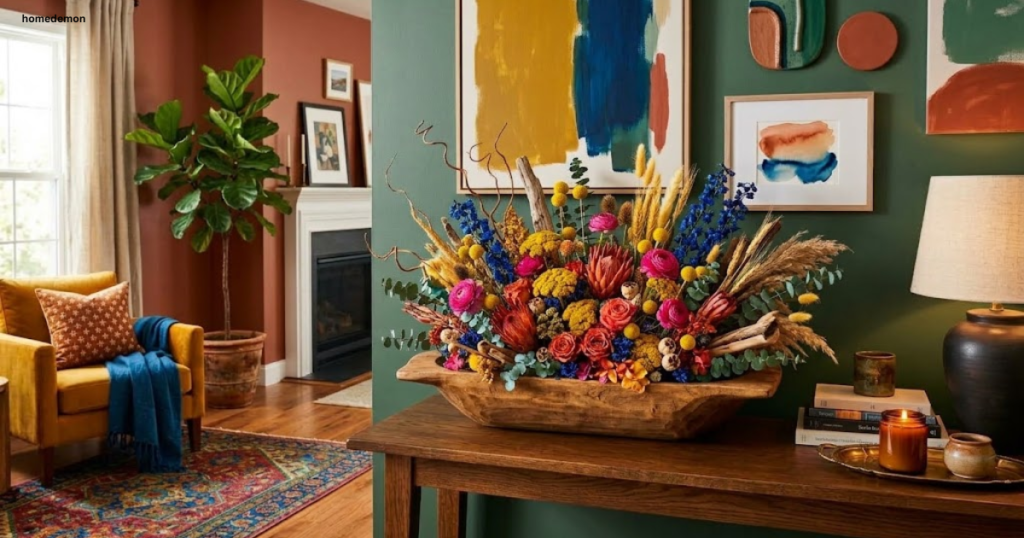
A vintage hand-carved wood trough, stone vessel, or aged terracotta shallow bowl provides instant organic texture.
- How to style it: Leave it completely empty for an architectural, minimalist look, or fill it seasonally with moss spheres, whole heirloom walnuts, or green pears.
- Why it works: It establishes a wide, weighted horizontal base that sits low to the surface, making it visually substantial without obstructing sightlines.
The Pedestal Compote and Fresh Foliage
A wide-mouthed marble, ceramic, or blackened metal compote bowl paired with architectural branches brings height and life.
- How to style it: Skip tightly packed floral bunches. Instead, clip two or three long olive branches, silver dollar eucalyptus, or sculptural bare branches from the yard. Let them branch out asymmetrically.
- Why it works: Loose branches offer airy presence without creating a dense, opaque wall across the table.
The Clustered Ceramic Trio
If a single centerpiece feels too rigid, group three textured vases or vessels of varying heights (e.g., 6-inch, 9-inch, and 12-inch).
- How to style it: Cluster them tightly in the center, slightly off to one side of the midpoint, rather than stringing them along a straight line.
- Why it works: Grouping objects in odd numbers creates visual tension and movement that catches daylight naturally.
The Functional Lazy Susan Tray
For family dining tables that see heavy daily use, mount styling elements onto a low-profile round tray or lazy susan made of fluted marble or aged oak.
- How to style it: Add a textured salt cellar, an amber glass bud vase with fresh cut stems, and a pair of brass taper holders.
- Why it works: If you need the entire surface clear for board games, homework, or family dinners, you pick up one single tray and move it to the counter in two seconds.
3. Balancing a Traditional Modern Dining Room

The transitional look—blending the warmth and patina of historic craftsmanship with the crisp silhouettes of contemporary design—is one of the most durable aesthetics in American homes. Getting it right on the table comes down to deliberate contrast:
[The Tension Formula]
Ornate Antique Table + Minimalist Matte Ceramics + Clean Brass
           OR
Sleek Modern Table + Raw Wood Trencher + Hand-Dipped Beeswax Tapers
If your table is a heavy, dark walnut trestle or turned-leg pedestal, avoid fussy ruffled runners or gilded lace. Counterbalance the historic weight with clean, matte black stoneware, minimalist white ceramic pitchers, and sleek, unadorned taper candles.
Conversely, if you have a minimalist, flat-slab dining table with powder-coated steel legs, soften that industrial geometry. Layer in a nubby raw linen runner with frayed edges, an unglazed rough-hewn clay jug, and warm wood serving bowls.
4. Styling by Table Shape
Different tabletop shapes demand entirely different layout geometries:
| Table Shape | Best Foundation Piece | Ideal Centerpiece Layout | What to Avoid |
| Long Rectangle (6–10 seats) | Woven or linen table runner (optional) | Rule of three: One dominant center piece flanked by low satellite accents | A single tiny candle or a flat line of scattered clutter |
| Round (48–60 inches) | Circular woven mat or marble disc | Single round focal vessel or clustered trio | Long linear runners or rectangular trays |
| Oval / Elliptical | Organic linen runner with soft ends | Elliptical shallow bowl or staggered candle group | Rigid, boxy square trays |
| Square (48–60 inches) | Square wood board or circular stone plinth | Large, wide-based architectural statement vase | Skinny, linear multi-piece setups |
5. Textiles: When to Run, Placemat, or Go Bare
The days of leaving a formal dining room covered permanently in an opaque, fitted damask tablecloth are largely behind us. Showing off natural tabletop materials—whether reclaimed oak, white quartz, or soapstone—adds substantial organic character to a room.
- Table Runners: Use a runner only if you want to visually narrow an excessively wide table or draw the eye down the length of the room. Choose open-weave slub cotton or washed Belgian linen that puddles gracefully past the table edge by 6 to 10 inches. Avoid synthetic, shiny poly-blends.
- Placemats: Reserve placemats for meal service unless you are using rich, tactile materials like braided water hyacinth, thick saddle leather, or round woven jute. If you keep them on the table permanently, ensure they contrast with the tabletop material (e.g., woven rattan over black oak).
- Embracing the Raw Top: If your dining table boasts stunning natural grain, hand-planed imperfections, or a dramatic stone vein, ditch the fabrics altogether. A clean vessel resting directly against the raw surface highlights the architecture of the piece.
6. Curating Lighting and Candlelight
A beautifully styled table falls flat if the lighting overhead is harsh or positioned at the wrong elevation.
- Chandelier Height: The bottom of your chandelier or pendant should hang 30 to 36 inches above the surface of the dining table for an eight-foot ceiling. Add 3 inches for every additional foot of ceiling height.
- Candle Integration: Incorporate real taper candles with cotton wicks for evening ambiance. Flank your primary centerpiece with pairs of simple brass, matte ceramic, or blackened bronze taper holders with solid ivory or beeswax tapers.
- The Flame Line: Ensure that the flame of your candles does not sit right at eye level when guests are seated. Stagger the heights so candlelight sparkles either slightly above or below your line of vision.
A Table That Lives Well
The real marker of great interior styling isn’t how pristine a table looks under studio photography; it’s how effortlessly the room carries itself throughout the day.
Choose materials that improve with age, keep proportions honest to the size of your room, and prioritize arrangements that invite people to pull up a chair rather than worry about disturbing the set.

Welcome to Home Demon! I’m Ameer Hamza, an SEO and Content Writing
Expert specializing in Guest Posting, with 3 years of experience.
I help websites rank higher, grow traffic, and look amazing. My goal
is to make SEO and web design simple and effective for everyone.
Let’s achieve more together!