

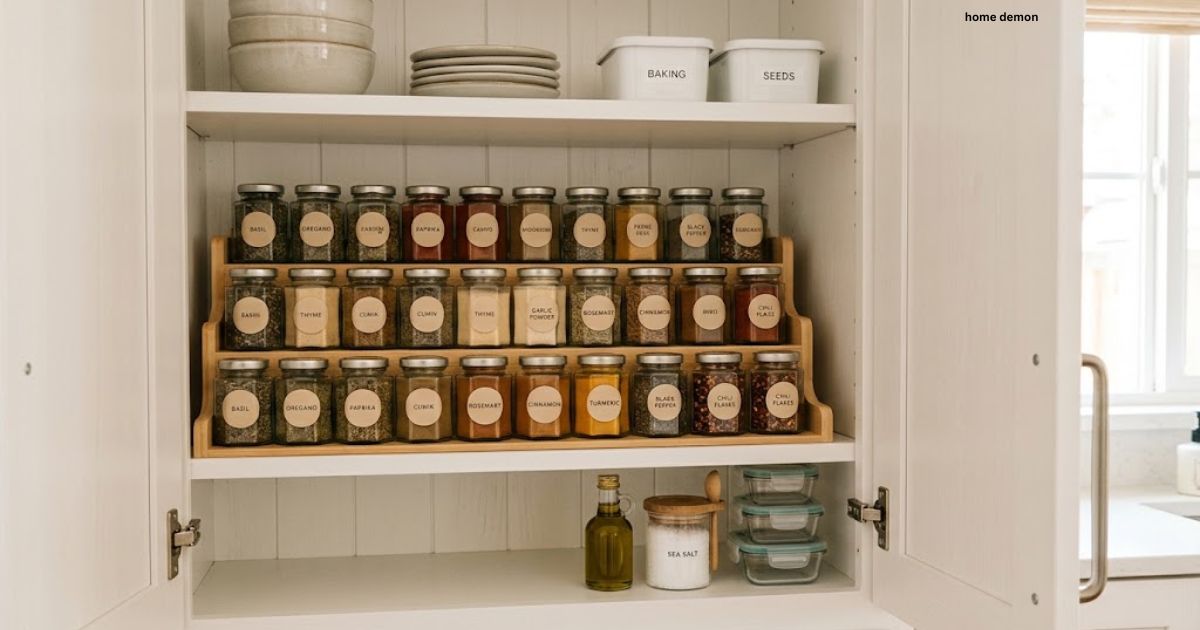
If your spice jars are stacked three deep and you can never find the cumin when you need it, you’re not alone. Small kitchen spice organization inside cabinet space is one of those problems that seems minor until you’re mid-recipe, digging through a pile of half-labeled bottles. The good news? You don’t need a bigger kitchen to fix this — you just need a smarter system. Whether you’re working with a narrow cabinet, an awkward corner, or barely any shelf depth at all, there’s a storage solution that fits. This guide walks through practical, tested ideas — from tiered spice racks to clever inside cabinet door storage — so you can turn that chaotic shelf into something you’ll actually enjoy opening.
Why Cabinet Spice Storage Beats the Countertop
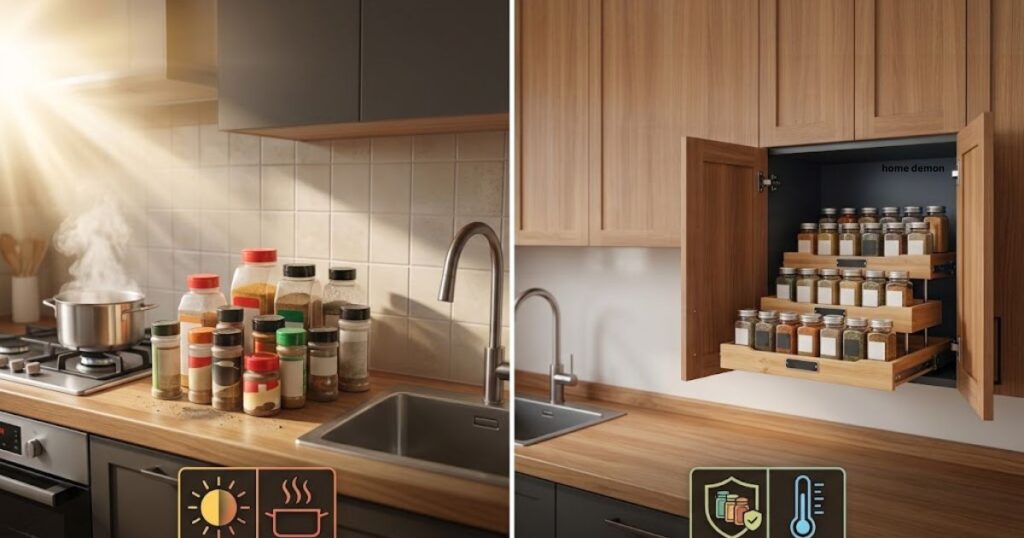
It’s tempting to leave spices out on the counter where they’re easy to grab. But heat, light, and steam from cooking actually speed up how fast spices lose their flavor. Storing them inside a kitchen cabinet keeps them cooler and away from direct sunlight, which means your spice organization setup isn’t just about tidiness — it protects your ingredients too. A closed cabinet also frees up valuable counter space, something every small kitchen desperately needs.
Tiered Spice Racks — The Easiest Fix for Cabinet Clutter
Tiered spice racks are probably the single most popular fix for cramped shelves, and for good reason. Instead of one flat row where back jars disappear from view, a tiered design lifts each row slightly higher than the one in front of it. You see every label at a glance instead of shuffling bottles around. Many tiered racks are expandable too, so they adjust to fit oddly-shaped kitchen cabinets without wasting a single inch of depth.
| Rack Type | Best For | Approximate Cost |
| Fixed 2-Tier Rack | Shallow cabinets | $10–$20 |
| Expandable 3-Tier Rack | Adjustable width cabinets | $15–$30 |
| Bamboo Step Rack | Eco-conscious kitchens | $20–$35 |
A bamboo expandable step-style rack, for instance, works particularly well in a narrow cabinet because you can set up just one tall row plus one short row instead of a full three-tier structure — something worth trying if your space is tight rather than deep.
Inside Cabinet Door Storage — Using Hidden Vertical Space
Here’s a spot most people completely overlook: the inside of the cabinet door itself. Inside cabinet door storage turns that flat, unused surface into an extra shelf without touching your existing cabinet layout. Slim door-mounted racks hold small jars upright, and because they sit on the door rather than the shelf, they don’t compete for space with anything else already inside.
There’s one catch worth mentioning — measure carefully before installing. The rack needs enough clearance so the door still closes properly against your existing shelves, and lids should sit snug enough that nothing spills when the door swings open. A magnetic strip is another option here; attach small metal spice tins directly to the door, and you’ve created a mini rack with zero drilling required.
Lazy Susans and Turntables for Deep Cabinets
Deep, dark cabinets are notorious for swallowing jars whole. A rotating turntable, often called a lazy Susan, solves this instantly. Instead of reaching blindly toward the back, you spin the tray and whatever you need rotates to the front. This works especially well in corner cabinets, where a two-Susan setup — one placed toward each front corner — keeps the center usable while giving you two independent spinning sections for spices.
Single-tier turntables suit shorter spaces, while two-tier versions pack in nearly double the jars without needing extra shelf height. If your jars vary in size, stack the shorter ones toward the center of the turntable so nothing tips as it rotates.
Sliding and Pull-Out Spice Drawers
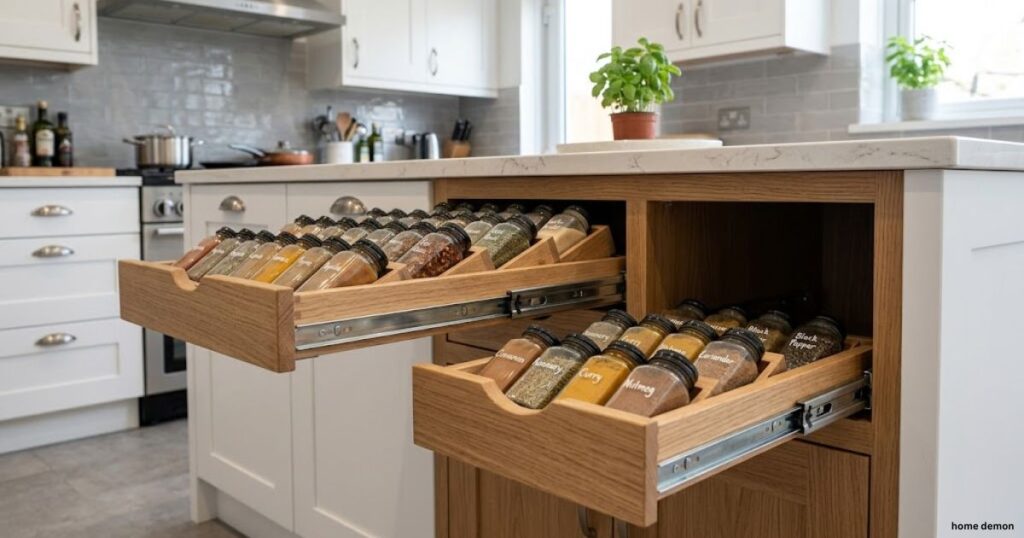
If you’d rather skip stacking altogether, a sliding or pull-out spice rack mounts directly to the inside wall of the cabinet and glides forward like a drawer. This design makes the most of otherwise wasted vertical space between shelves, and because it slides toward you, there’s no reaching or crouching involved. It’s a great match for tall, narrow gaps that are too small for a standard shelf but too deep to search by hand.
Labeling and Grouping for Faster Access
Even the best rack won’t help much if spices are scattered randomly. Group jars by how often you use them — keep everyday staples like salt, pepper, and garlic powder toward the front, and reserve rarely-used ones for the back row. Clear, consistent labeling matters more than people expect; a quick glance should tell you exactly what’s inside without lifting a single jar. Alphabetical order works well for large collections, while flavor-based grouping (baking spices, savory blends, heat-based spices) suits smaller ones.
Choosing the Right Containers for Small Spaces
Original packaging rarely fits neatly into a tiered spice rack or door-mounted holder. Uniform glass jars solve this — they stack evenly, seal tightly to preserve freshness, and look far tidier than mismatched boxes and bags. Reused mason jars or small baby food jars work just as well if you’re on a budget, as long as the lids seal completely to keep moisture and air out.
Common Mistakes to Avoid
Even with the right rack, a few habits quietly undo your spice organization efforts. Storing jars near the stove or oven exposes them to heat, which fades flavor far faster than most people realize. Skipping labels feels harmless at first, but within a few weeks, unlabeled jars blur together and you’re back to guessing. And cramming too many jars onto one tier defeats the purpose of a tiered spice rack entirely — leave a little breathing room so each row stays easy to scan.
Frequently Asked Questions
What’s the best way to organize spices in a small cabinet? A tiered rack combined with door-mounted storage usually works best, since it splits your collection across two separate surfaces instead of cramming everything onto one shelf.
Do tiered spice racks work in narrow cabinets? Yes. Many expandable versions adjust in width, and you can even build a shorter two-row setup instead of a full three-tier structure if your cabinet is tight on space.
Is inside cabinet door storage safe for glass jars? It’s generally fine as long as the rack holds jars snugly and the door has enough clearance to close without jars pressing against the shelves inside.
Final Thoughts on Small Kitchen Spice Organization
You don’t need a full kitchen renovation to fix a messy spice shelf. A combination of tiered spice racks, smart inside cabinet door storage, and a rotating turntable can transform even the tightest cabinet into something functional and easy to navigate. Start with one upgrade — maybe the door rack, since it requires the least effort — and build from there based on how your collection grows. Once everything has a clear, labeled spot, small kitchen spice organization inside cabinet space stops being a daily frustration and becomes one of the easiest parts of your kitchen to maintain.

Welcome to Home Demon! I’m Ameer Hamza, an SEO and Content Writing
Expert specializing in Guest Posting, with 3 years of experience.
I help websites rank higher, grow traffic, and look amazing. My goal
is to make SEO and web design simple and effective for everyone.
Let’s achieve more together!