

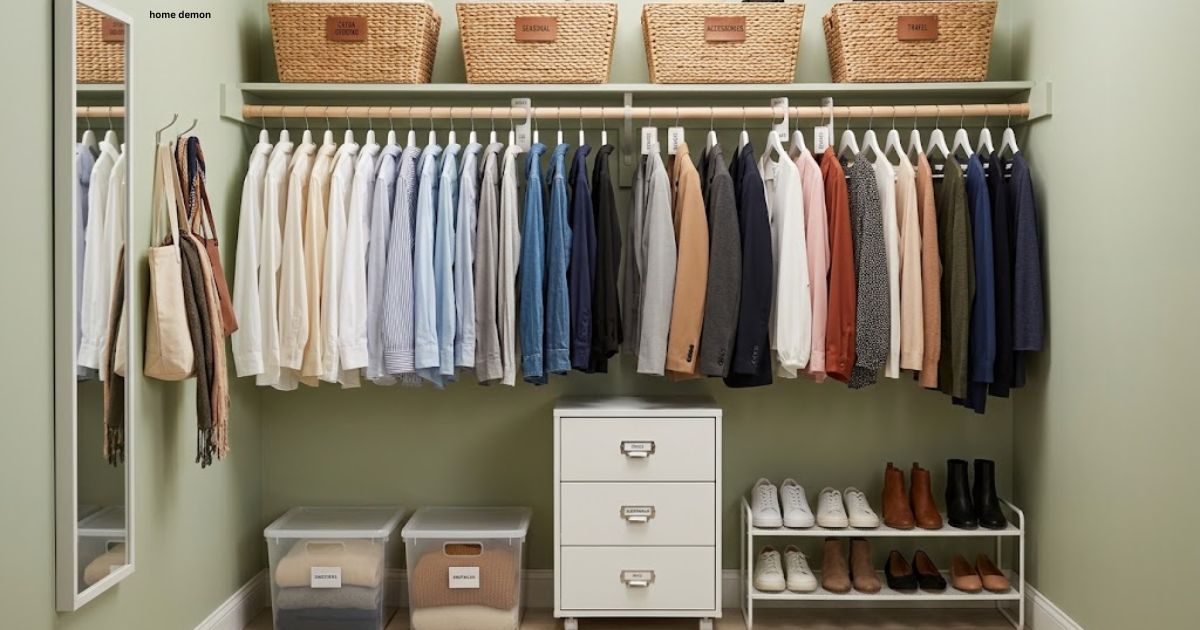
A single closet rod sounds simple enough until you’re standing in front of it wondering why half your wardrobe is somehow still in a laundry basket. Most reach-in closets come with exactly one rod stretched wall to wall, and while that setup works fine for someone with ten shirts and nothing else, it falls apart fast for anyone with a real mix of clothes — long dresses, short tops, jackets, jeans, all crammed onto the same bar at the same height. If you’re trying to figure out how to organize a reach-in closet with one rod, the fix usually isn’t a bigger closet. It’s rethinking how that one rod — and the space above and below it — actually gets used.
Why One Rod Wastes So Much Vertical Space
Here’s the thing nobody tells you when you move into a place with a standard reach-in closet: that single rod is almost always hung at a height meant for your longest items, like dresses or coats. Which means every t-shirt, blouse, and folded cardigan hanging next to those long pieces is wasting a huge chunk of space underneath it — space that’s just sitting there empty, doing nothing.
That gap is exactly where a small closet double rod hack comes in.
The Double Rod Hack, Explained

Instead of one rod spanning the entire closet, split it into sections. Keep a portion of the existing rod for long items — dresses, maxi skirts, robes, coats — since those genuinely need the full height. For the rest of the closet, where shirts, folded-over pants, and jackets live, add a second rod roughly halfway down, underneath the first one.
This single change can genuinely double your hanging capacity without adding a single inch of floor space. And the good news for renters: this doesn’t require any permanent renovation. Tension rods, adjustable closet rod kits, and clip-on secondary rods all exist specifically so you can add this second tier without drilling into anything.
| Section | Rod Height | Best For |
|---|---|---|
| Left side (single rod) | Full height | Dresses, coats, robes |
| Right side (top rod) | Upper third | Shirts, blouses, jackets |
| Right side (bottom rod) | Lower third | Folded pants, skirts |
Renter-Friendly Ways to Add a Second Rod
Renter closet storage solutions are all about avoiding anything that leaves a hole in the wall once you move out. A tension rod — the kind normally used for shower curtains — can be wedged into a section of the closet without any hardware at all, though it works best for lighter items since it can bow under too much weight.
For something sturdier, adjustable closet rod extenders clip directly onto the existing rod and hang down, giving you a second bar that’s suspended rather than wall-mounted. These hold more weight than a tension rod and still leave zero marks when you take them out. If your lease allows small screws (many do, as long as holes get patched later), a low-cost closet rod bracket kit is the most stable option, but it’s worth checking your lease terms first.
Zoning the Rest of the Closet

Once the rod situation is sorted, the next issue is usually everything around it — the empty floor space, the single shelf above, and whatever’s happening in the corners. Treat the closet like it has distinct zones rather than one big undefined area.
The shelf above the rod is prime real estate for items you don’t need daily — off-season clothing, extra bedding, or bags. The floor underneath your double-rod section is where shoes or a small set of stackable bins can live, since that space is otherwise just wasted air below your shortest hanging items.
Hooks Solve More Than You’d Expect
A couple of hooks mounted on the inside wall or the back of the closet door can absorb a surprising amount of clutter — bags, scarves, belts, robes, the jacket you wear constantly and don’t want to bother hanging properly. Command hooks work well here too, since they hold a decent amount of weight and come off cleanly, which matters if you’re not supposed to be putting holes in anything.
Shelf Dividers and Bins for the Little Stuff
Sweaters, folded jeans, and stacks of t-shirts tend to lean into each other and slowly collapse into one messy pile if they’re just sitting loose on a shelf. Shelf dividers section that space into individual columns, so one stack staying upright doesn’t depend on the stack next to it. Small bins do something similar for items too awkward to fold neatly — socks, underwear, accessories — giving them a defined spot instead of a corner where they just accumulate.
Matching Hangers Make a Bigger Difference Than You’d Think

It sounds like a cosmetic detail, but swapping mismatched wire hangers for one uniform type genuinely changes how organized a closet looks and functions. Slim velvet-style hangers, in particular, take up noticeably less horizontal space than bulky plastic ones, which means more clothes fit on the same rod length without anything looking crammed.
What to Skip If You’re Short on Time or Budget
Not every closet needs a full renovation to function well. If a complete double-rod system feels like too much right now, even just adding hooks and one small shelf divider makes a visible difference. Start with whichever fix solves your biggest daily annoyance — usually that’s either “everything’s crammed on one rod” or “the floor is a pile of stuff” — and build from there.
Frequently Asked Questions
Can I add a second rod without drilling holes in a rental closet? Yes. Tension rods and clip-on rod extenders both add a second hanging level without any permanent hardware, making them ideal for renters who need to avoid wall damage.
How much weight can a tension rod actually hold? It varies by brand, but most tension rods are best suited for lighter items like shirts and folded pants rather than heavy coats or dresses, since too much weight can cause them to bow or slip.
Is a double rod hack worth it for a small closet? Generally yes — it takes advantage of vertical space that’s otherwise sitting empty under shorter hanging items, which is often the single biggest source of wasted room in a reach-in closet.
A Note on Balance and Weight Distribution
Once you’ve split the rod or added a second tier, it’s worth spreading clothing evenly across both sections rather than piling the bulk of your wardrobe onto whichever rod is easiest to reach. An unevenly loaded rod — especially a clipped or tension-mounted one — is more likely to sag over time, and a lopsided closet tends to look cluttered even when the total amount of clothing hasn’t changed. A few extra seconds spent balancing the load when you put laundry away pays off in a closet that stays functional for years instead of months.
Final Thoughts
Figuring out how to organize a reach-in closet with one rod really comes down to stopping the rod from being the only thing doing any work. Split it where it makes sense, add a second tier for shorter items, and use hooks, bins, and dividers to catch everything that doesn’t belong on a hanger in the first place. None of this requires a full closet system — just a bit of rearranging and a few renter-friendly tools that come out just as easily as they went in.

Welcome to Home Demon! I’m Ameer Hamza, an SEO and Content Writing
Expert specializing in Guest Posting, with 3 years of experience.
I help websites rank higher, grow traffic, and look amazing. My goal
is to make SEO and web design simple and effective for everyone.
Let’s achieve more together!