

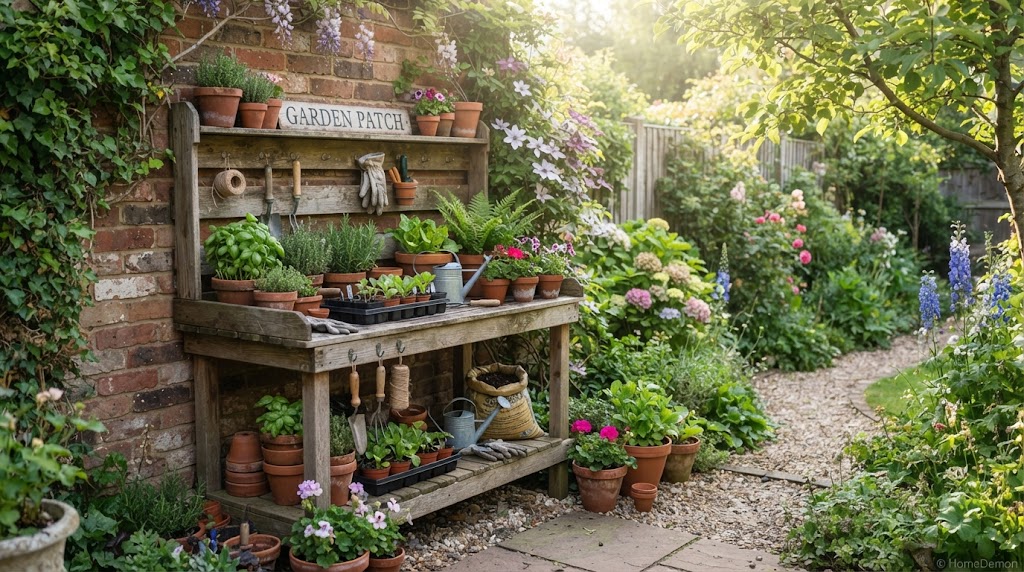
By Ameer Hamza SEO
The best small potting bench for a small backyard is a narrow bench, about 20 to 24 inches deep and 34 to 38 inches high, made from rot-resistant wood like cedar or from repurposed pallet wood. Add a waterproof top and a place for your tools, and it will fit a patio corner, a fence line, or a side yard.
You do not need a big garden to have a proper potting spot. This guide shares small potting bench ideas for small backyard spaces, from budget pallet builds to slim cedar tables with zinc countertops. You will also find size tips, tool storage ideas, and answers to common questions.
What Size Should a Small Potting Bench Be?
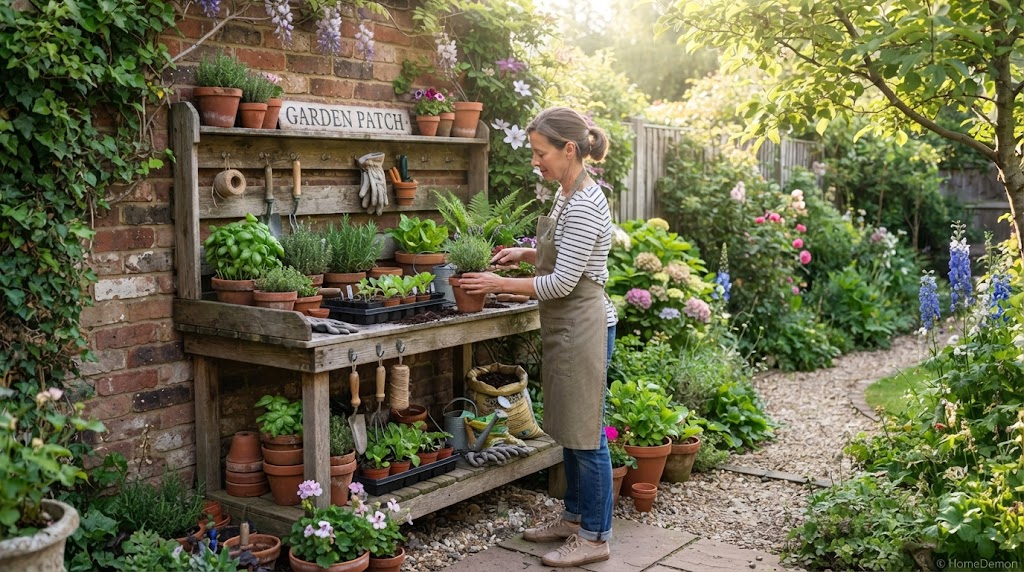
Get the size right first. A bench that is too big blocks your path. A bench that is too low hurts your back.
Height: Most gardening and workshop guides suggest a work surface between 34 and 38 inches for standing tasks. Homestyler’s bench guide places potting stations near 34 inches, and VEVOR’s ergonomic guide gives the same 34 to 38 inch range, roughly wrist height when your arms hang at your sides. If you are shorter, stay near 34 inches. If you are over 6 feet, go a little higher.
Depth and width: In a small yard, a depth of 18 to 24 inches is enough for a pot, a trowel, and a bag of soil. A width of 30 to 48 inches fits most corners.
| Part | Good size for small yards |
|---|---|
| Height | 34 to 38 inches |
| Depth | 18 to 24 inches |
| Width | 30 to 48 inches |
| Lower shelf | Knee to hip height, for heavy soil bags |
Also think about where it goes. Place the bench near a water tap and close to your compost or green waste bin. This saves many steps every time you pot a plant.
1. Repurposed Wood Pallet Potting Bench

A pallet bench is the cheapest way to start. One or two pallets can become the back, the top, and the shelf. The rustic look also suits most backyards.
How to build it:
- Use one pallet upright as the back panel and cut a second pallet for the work surface.
- Add four legs cut to your chosen height, and brace them with cross boards.
- Leave small gaps between the top slats. Slatted surfaces drain fast and help avoid standing water, which lowers the risk of fungus problems, according to the Homestyler guide.
- Sand every surface and seal the wood with an outdoor sealer.
Pallet safety tip: Always check the stamp on the pallet. Pallets marked HT were heat treated, which is the safer choice. Avoid pallets marked MB, because they were treated with methyl bromide. The marking system comes from the international ISPM 15 standard for wood packaging. Skip any pallet with oil stains or strong smells.
2. Slim Cedar Potting Table with Zinc Countertop

If you want something that looks neat and lasts for years, build or buy a slim cedar potting table with a zinc top.
Why cedar: Cedar naturally resists rot and insects, and it stays light, so you can move the table if needed. Over time it fades to a soft silver-grey outdoors.
Why zinc: A zinc sheet is waterproof and easy to wipe clean after messy potting. It also develops a soft grey patina. Small scratches become part of the aged look, which many people like.
Best size for compact yards: Keep the table 18 to 20 inches deep and about 36 to 42 inches wide. Fit a lower slatted shelf for pots and a bag of potting mix.
Budget tip: Zinc costs more than wood. To save money, cover only the main work area with a zinc sheet on exterior-grade plywood, and leave the rest as plain cedar.
3. Compact Outdoor Potting Table for Tight Corners
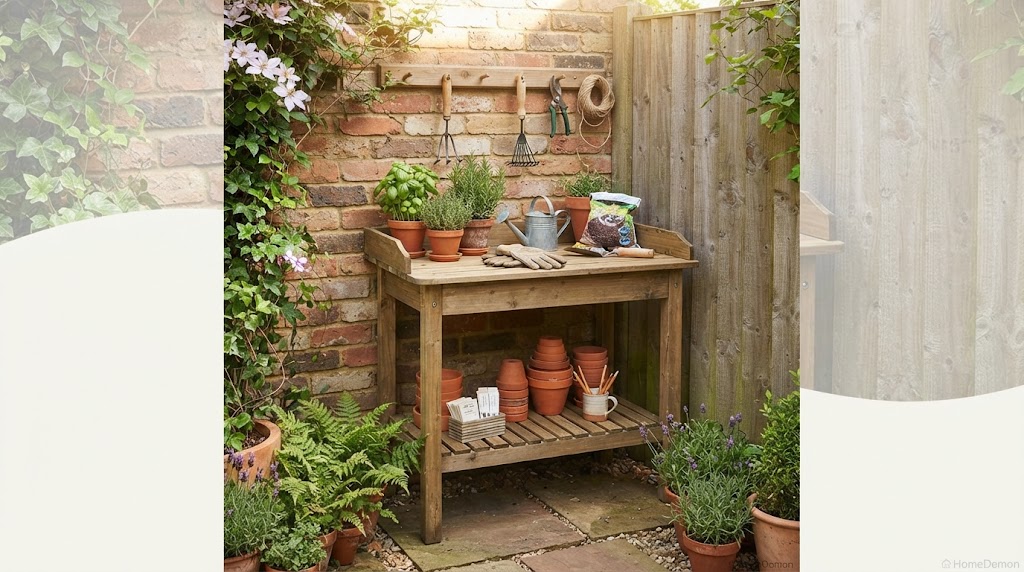
A compact outdoor potting table is ideal when your yard is more of a patio than a lawn. These designs are narrow, often 16 to 18 inches deep, and sit flat against a fence or wall.
Ideas that work well:
- A console-style table with one lower shelf and a back rail for hooks
- A corner bench shaped to fit where two fences meet
- A drop-leaf table, where one side lifts up when you need extra space
Because the bench stays against the wall, your walking space stays clear. If the table is tall or has high shelves, fix it to the wall so it cannot tip.
4. Foldable Garden Workbench
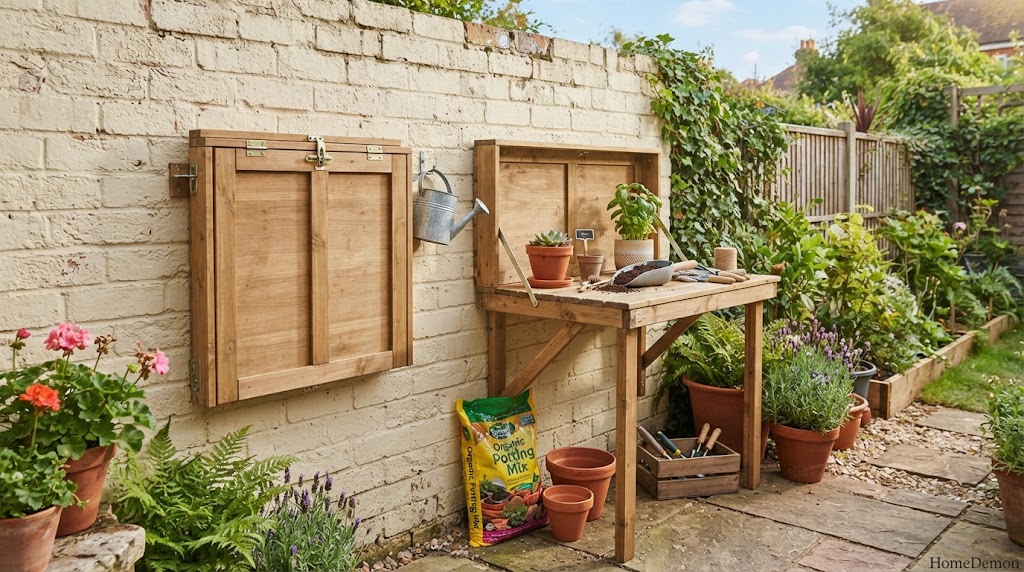
A foldable garden workbench gives you a full work surface only when you need it. When you finish, fold it flat and walk past it.
Two popular styles:
- Wall-mounted fold-down bench: The top hangs on hinges and drops down on locking braces. When folded, it takes up only a few inches of wall.
- Freestanding folding table: It folds flat and can be stored in a shed or garage during winter.
What to check before you buy or build:
- Strong locking braces. Wet soil and full pots are heavy.
- Hinges and brackets made for outdoor use, such as galvanized or stainless steel
- A surface that is wide enough for a standard 10 to 12 inch pot
5. Outdoor Garden Tool Organizer Ideas

A small bench works better when every tool has a place. Good storage also keeps your work surface free for planting. A simple outdoor garden tool organizer can be added to any of the benches above.
Easy ideas:
- Pegboard back panel: Use a sealed or exterior-grade board and hang hand tools on hooks.
- Rail with S-hooks: Fix a wooden rail or metal bar above the bench for trowels, snips, and gloves.
- Side hooks: Hang a watering can, apron, or twine on the end of the bench.
- Hanging buckets or tin cans: Keep small items like plant labels, seeds, and ties together.
- Lower shelf bins: Store soil, fertilizer, and extra pots out of the way.
A good rule is to keep the tools you use most within easy reach, about 20 to 24 inches from where you stand, and to store heavy items at waist height or lower so you do not strain your back. This comes from the same Homestyler layout advice. It also helps to group tools by task, such as pruning, potting, and cleaning.
6. Potting Bench with a Soil Tray or Bin

Potting is messy, and a lot of soil falls on the ground. A bench with a removable soil tray, or a shallow bin placed under the work surface, catches the loose soil so you can reuse it. This keeps the patio clean and saves money on potting mix.
You can add this to a pallet bench, a cedar table, or a foldable bench. A plastic bin that slides into the lower shelf is the easiest option.
How to Choose the Right Design
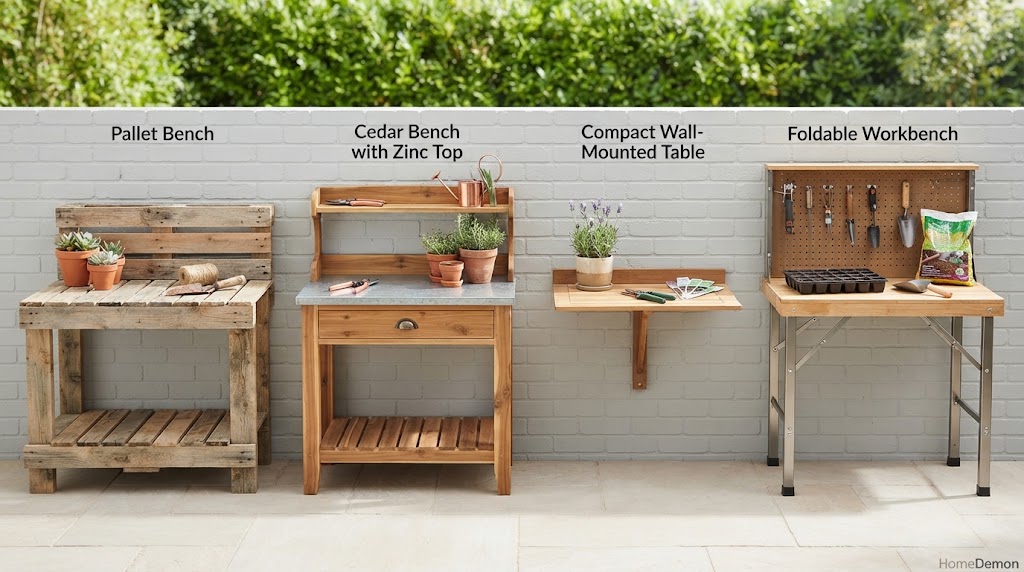
| Design | Cost | Durability | Best for |
|---|---|---|---|
| Pallet bench | Low | Medium, if sealed well | Beginners and tight budgets |
| Cedar with zinc top | Higher | High | Long-term, neat-looking setups |
| Compact wall table | Medium | Medium to high | Patios and narrow side yards |
| Foldable workbench | Medium | Medium | Very small spaces and seasonal use |
If you are unsure, ask yourself three questions. How much space can you give up all year? How long do you want the bench to last? How much do you want to spend? Your answers will point to the right design.
Simple Care Tips
- Reseal wood once a year, or when water stops beading on the surface.
- Wipe zinc with a damp cloth after use. Do not leave wet soil on it for long periods.
- Check screws, hinges, and braces at the start of each season.
- Fold up and store foldable benches in winter if your weather is harsh.
Frequently Asked Questions
What is the best height for a small potting bench?
Most people find 34 to 38 inches comfortable for standing work. Choose the lower end if you are shorter, and the higher end if you are tall or you lift heavy pots often.
What is the best wood for an outdoor potting bench?
Cedar is one of the best choices because it resists rot and insects naturally. Treated pine and sealed pallet wood are cheaper options, but they need regular sealing.
Are wood pallets safe for a potting bench?
They can be, if you choose carefully. Look for the HT stamp, which means heat treated, and avoid pallets marked MB or any pallet that is stained or smells of chemicals. Sand and seal the wood before use.
Is a zinc countertop good for a potting table?
Yes. Zinc is waterproof and easy to clean, and it develops a soft patina over time. It can scratch, so it suits people who like a natural, aged look.
How can I make a potting bench fit a very small backyard?
Choose a narrow bench of 16 to 20 inches deep, place it against a fence or wall, and use a foldable or wall-mounted design. Use hooks and rails above the bench instead of wide shelves.

Welcome to Home Demon! I’m Ameer Hamza, an SEO and Content Writing
Expert specializing in Guest Posting, with 3 years of experience.
I help websites rank higher, grow traffic, and look amazing. My goal
is to make SEO and web design simple and effective for everyone.
Let’s achieve more together!